
Pro-productivity policies are strategies that help economies get more done with the resources they have, like workers, equipment, and technology. Since the 2010s, many countries have seen a slowdown in how fast they’re improving productivity.
Turning this around requires a broad approach to pro-productivity policy. Investment in technology, skills and infrastructure matters, but so do innovation and diffusion, well-functioning markets, strong institutions and international connections. The challenge is not simply to generate new ideas and technologies, but to ensure that businesses and workers have the capabilities and incentives to adopt them, use them effectively and translate them into higher productivity. Getting these connections right can support stronger businesses, better jobs and higher living standards.
Find out more by reading our research, blogs and podcast content on pro-productivity policies.
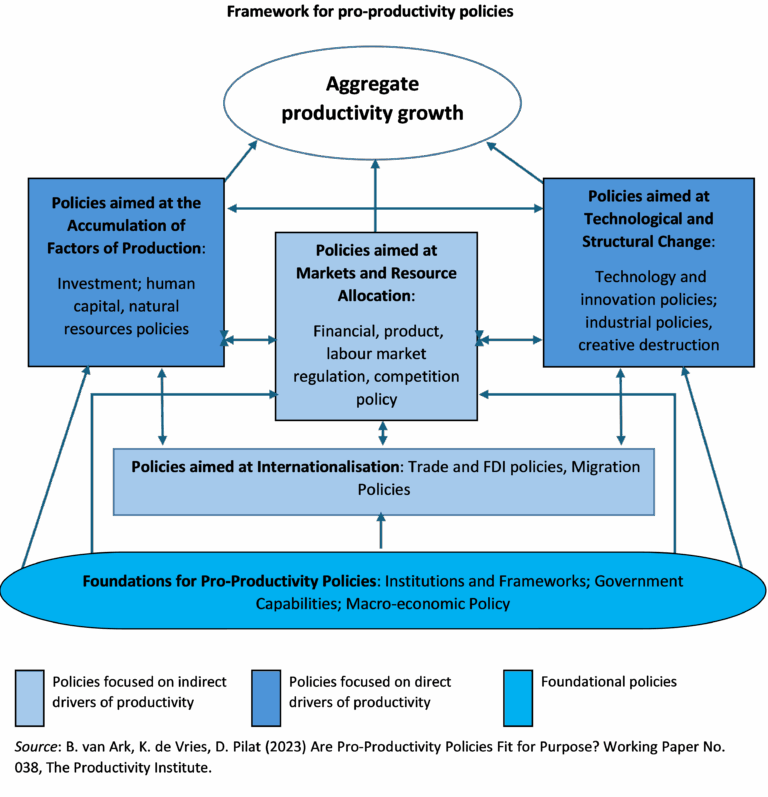
This series brings together research exploring how countries around the world have developed and implemented policies to improve productivity over the past six decades. Looking at 17 country studies, including 13 G20 nations, this series compares different policy approaches, their effectiveness and the lessons they offer for future policymaking, such as skills, innovation, investment, trade, institutions and structural reform.


This series explores how pro-productivity policies can support more inclusive growth and better, more decent work. Commissioned and funded by the International Labour Organization (ILO), the research examines how pro-productivity policies can raise productivity while widening participation in economic growth and improving the quality of work. It highlights the synergies and trade-offs between these objectives, and the policy choices needed to create a virtuous cycle of higher productivity, shared prosperity and decent work.