
The Investment in Productive Places Campaign (IPPC) supports locations across the UK to strengthen their economies, raise productivity and improve wellbeing.
The campaign is aimed at helping places understand how their resources can be used more effectively and how long-term prosperity can be built through broad-based, long-term, investment-led and evidence‑based strategies.
Regional inequalities in the UK remain deep and persistent. Many communities face:

A narrow focus on single issues or narrowly focused investments does not address these structural challenges. Places need an approach that reflects their full set of assets and constraints.
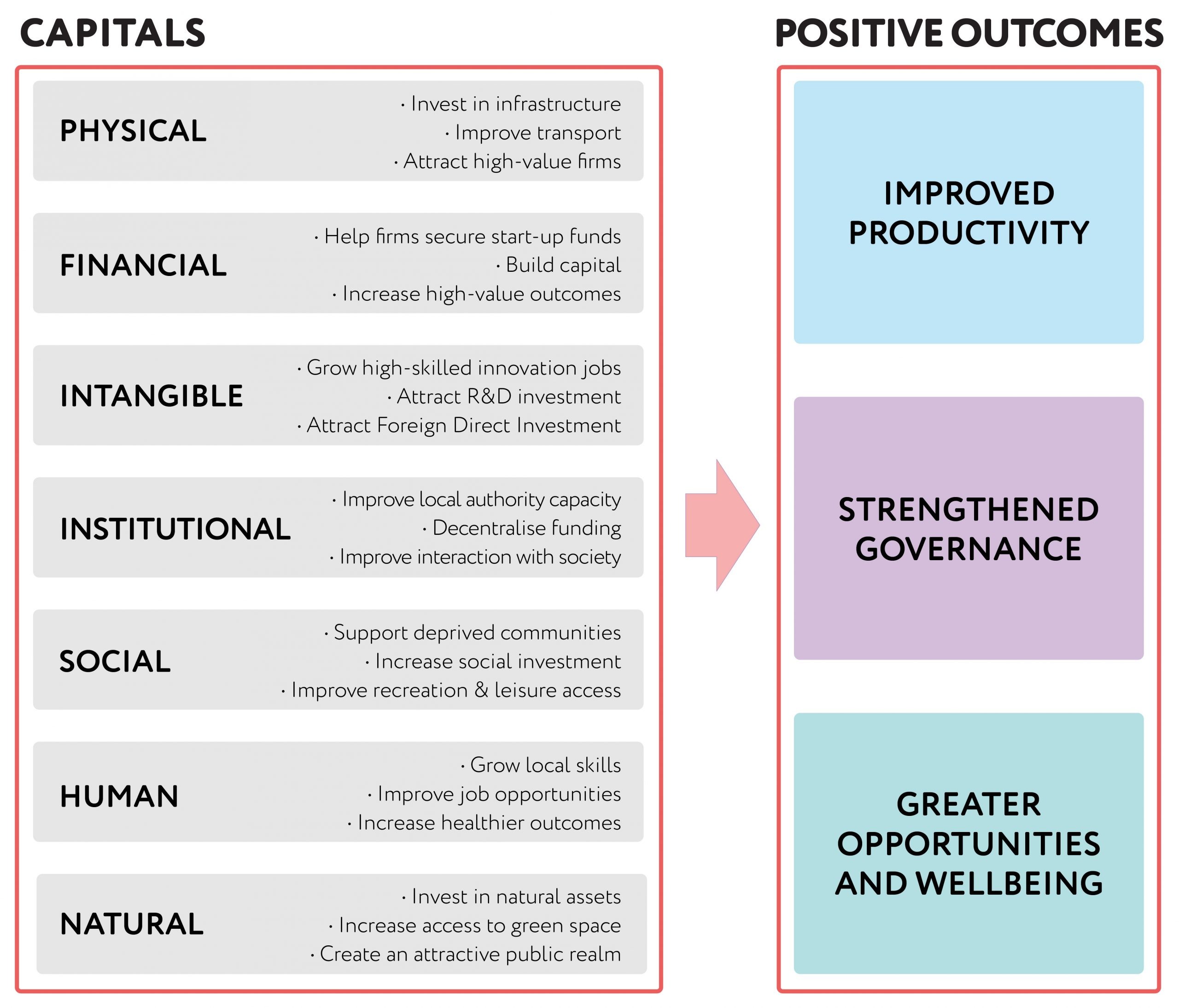
The campaign combines:
This mixed methods approach produces a rounded picture of how places function, what holds them back and where investment can have the greatest impact.
It provides local authorities, the business community, the education system and community groups with insights on how a joined up investment strategy can be shaped.
The findings from the campaign’s first phase highlight several important lessons:
 The pilot study focused on Rochdale, examining how industrial heritage, new development and community engagement can support a more inclusive future.
In 2026 we are releasing our reports for work on:
Each place brings different challenges and assets, from rural isolation to coastal opportunity and from strong community networks to gaps in skills or health.
Investing in places is an opportunity, not a cost. When communities have the tools, data and autonomy to shape their own future, they can shift from development traps to cycles of inclusive, sustainable growth.
If you are interested in discussing the campaign to your locality, please contact tpi@manchester.ac.uk
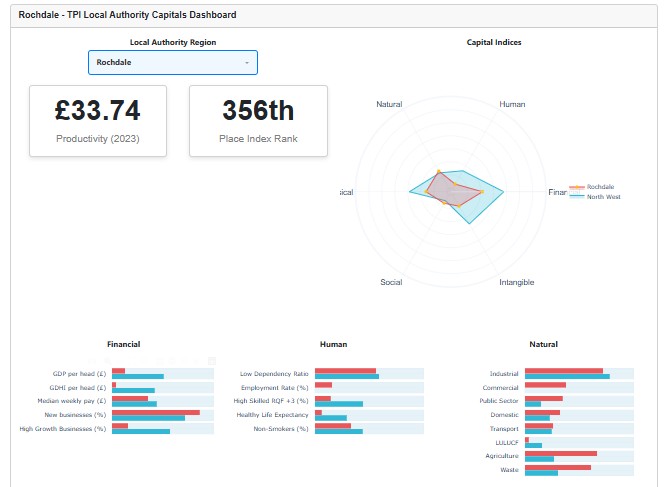
The Productivity Lab’s has developed a data tool, the TPI Local Authority Capitals Dashboard, that helps UK local authorities understand how their underlying assets shape productivity. Using the “capitals framework”, it benchmarks the strength of physical, human, natural, social, financial and intangible capital across 361 local authorities.
The data tool shows where places are performing well and where there may be room to grow. Charts of rankings help users explore how their area compares to the regional average, to understand the strength of the capital assets in their authority.
Find out more by reading the Lab blog about the dashboard.

COMING SOON

COMING SOON

COMING SOON

COMING SOON