

Training smarter: unlocking productivity gains in UK firms
 Jun Du, Professor of Economics, Aston Business School
UK productivity has stagnated at around 0.5% annual growth since 2008, down from 2.3% in the previous decade.¹ Weak productivity means slower wage rises, lower living standards, and a less competitive economy. Amid the many factors driving this productivity puzzle, workforce skills remain central to the debate.
Yet employers are investing less in workforce development, not more. Training expenditure per worker fell 20% between 2006 and 2017. On-the-job training dropped 18% between 2012 and 2017.² Average training days per trainee fell to just 4.4 days annually. Only 62% of employees received any training in 2019, down from 65% in 2012.³
Unlike Germany or Sweden, where governments and industry coordinate to address skills gaps, the UK leaves training decisions largely to individual employers.
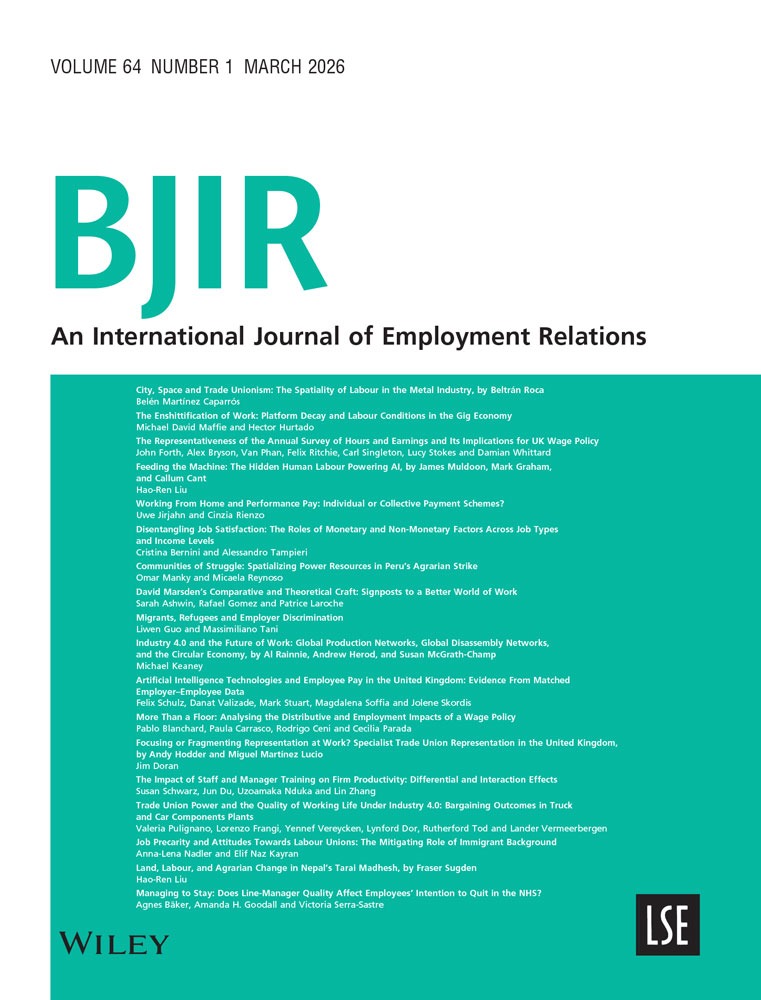
Our recently published research in the British Journal of Industrial Relations, with Susan Schwarz (King’s College London), Uzoamaka Nduka (KPMG) and Lin Zhang (Aston Business School), provides new evidence on how training investments translate into productivity gains at the firm level.⁴ An accompanying policy paper from the Centre for Business Prosperity quantifies these effects at scale.⁵ The findings challenge some conventional assumptions and point toward where policy attention might be most effectively focused.
What we found
We analysed 19,289 firm-year observations between 2011 and 2019 from three government micro-level datasets: the UK Employer Skills Survey, the Investment in Training Survey and the Business Structure Database. We tested how different types of training affect labour productivity, accounting for the possibility that more productive firms might simply be more likely to train.
Three findings stand out.
Training intensity matters more than coverage. The conventional policy emphasis has often been on getting more workers into training. Our evidence suggests this misses the point.
Training expenditure per trainee, which captures the depth and quality of investment, generates substantially larger productivity effects than simply expanding the proportion of workers trained. A 20% increase in spending per staff member trained delivers 2% productivity gains. For managers, the same increase delivers 3.6% gains. If fewer than one in five staff are trained each year, expanding coverage without increasing intensity of training can harm productivity. Poorly designed training disrupts work without building useful skills. Above this threshold, returns increase significantly. The implication is clear: firms gain most from deep, intensive training rather than spreading resources thinly.
Professional and technical staff yield the highest returns. Training for professionals (such as accountants or graphic designers) and associate professionals (such as a lab technicians or human resource officers), those responsible for implementing strategy and driving technical performance, generates productivity gains of around 10.8% per 10 percentage point increase in coverage. This is nearly double the effect of general staff training and equivalent to roughly £11,000 additional revenue per employee.
General clerical and administrative staff show 5.5% gains (around £5,600 per employee). Yet only 23% of professional staff receive training each year, notably lower than other occupational groups. This challenges the traditional UK policy emphasis on entry-level and lower-skilled training. The productivity case for professional and mid-career development is substantially stronger than most policy makers recognise.
Complementary investment in staff and managers amplifies effects. When firms invest in both manager and staff training together, the combined productivity impact exceeds individual effects by 20–25%. Skilled managers are more effective when they have trained staff to work with. Trained staff are more productive under capable management. Conversely, either without the other generates substantially smaller returns.
Managers cannot implement improved practices without skilled staff. Staff cannot use new skills effectively without capable management. Policies that target only one group will miss most of the available gains.
The scale of the opportunity
If firms in the bottom quarter for training coverage (those training the fewest staff) raised their training levels to match the average firm, the UK economy could gain £44–46 billion in additional output, around 1.5% of GDP.
More ambitious scenarios, where firms across the distribution converge toward best practice, combining high coverage with intensive expenditure and targeted professional development, could deliver £245–265 billion (8.5–9.2% of GDP). This would close a substantial part of the UK’s 16–24% productivity gap with France, Germany, and the United States.⁶
The gap between what the evidence shows is effective and what firms actually do is the key policy challenge.
 What we still don’t know

While training intensity, professional development and complementary manager-staff investment matter a lot for productivity, why do firms still underinvest in effective training? And which policies would change behaviour most cost-effectively?
For this we need to answer at least three important follow-up questions.
What constraints are actually binding? For firms with low training investment, the primary barrier might be financial (insufficient capital), organisational (lacking management sophistication for training design), informational (unaware of the returns), or structural (inherent to their sector or business model). Do these barriers differ systematically by firm size, sector, or workforce composition?
Why is professional training under-provided? Given the substantial productivity returns, firms should be prioritising professional development more heavily. Perhaps they fear that competitors will poach newly trained staff. Perhaps they are unaware of the returns. We do not yet know which factors matters most.
How would firms respond to different interventions? Would subsidies for training expenditure primarily increase intensity, coverage, or both? Would matched funding (where government co-invests with employers) or portable training accounts (where workers own their training records) prove more effective? Would sector-specific approaches address different barriers more cost-effectively than economy-wide mechanisms?
Answering these questions requires more than observational analysis. It demands firm surveys identifying binding constraints, pilot evaluations of specific policy mechanisms, and carefully designed experiments that compare outcomes for firms affected by a policy change against those that were not, to establish what actually works.
What comes next
We are currently working with the Industrial Strategy Advisory Council to further explore these questions and help fill the evidence gaps needed for effective policy design, particularly understanding how training patterns vary across priority sectors and which firm types face the most binding constraints.
The productivity returns we document—5.5% to 10.8% depending on training type and complementarity—far exceed typical training costs. For an economy facing a considerable productivity gap with peer nations, strategic training investment represents one of the highest-return interventions available. The evidence on what works exists. What’s needed now is the commitment to understand barriers, test mechanisms, and act on the findings.
Jun Du is Professor of Economics and International Business at Aston Business School and Director of the Centre for Business Prosperity.
Notes
- The Productivity Institute (2024), Productivity Primer: Why Productivity Matters for the Economy, Business and Places.
- Green, F. and Henseke, G. (2019), Training trends in Britain, Unionlearn Research Paper 22.
- Department for Education (2023), Employer Skills Survey.
- Schwarz, S., Du, J., Nduka, U. and Zhang, L. (2025), The impact of staff and manager training on firm productivity: differential and interaction effects, British Journal of Industrial Relations.
- Du, J., Schwarz, S. and Zhang, L. (2025), The business case for strategic training investment: evidence from UK firms on productivity returns, Centre for Business Prosperity Insight Paper, Aston University.
- ONS (2023), International Comparisons of Productivity: Final Estimates; OECD (2023), OECD Productivity Statistics.